Two minutes into the 1980 Africa Cup of Nations final, Segun Odegbami scored against Algeria. He scored again before the break. Muda Lawal made it 3-0 after it, and Nigeria had a first continental title in front of a crowd put at 80,000 by RSSSF and 85,000 by other records. More than four decades on, the main bowl of the National Stadium in Surulere is sealed.
| National Stadium Surulere | At a glance |
|---|---|
| Official name | National Stadium, Lagos (no renaming; the Moshood Abiola name belongs to Abuja) |
| Opened | 4 December 1972, main venue of the 1973 All-Africa Games |
| Capacity | About 55,000 originally, later reduced to 45,000 |
| Biggest nights | AFCON 1980 final won 3-0; AFCON 2000 final lost on penalties |
| Last senior national team game | 2004 |
| Renovation | Adopt-a-stadium work from 2020; PPP concession pursued by the NSC in 2026 |
| Status, October 2026 | Main bowl closed; pool, indoor hall and tennis courts in use |
Built for a country looking forward
The gates opened on 4 December 1972. Lagos was still the federal capital. Within weeks the stadium staged the second All-Africa Games, from 7 to 18 January 1973, and THISDAY describes it as a post-war project of the Gowon government that locals came to call Sports City.
It hurt, too.
THISDAY recalls that Tunisia ended Nigeria's hopes of a first World Cup ticket there in 1977. Three years later the Green Eagles lifted the Nations Cup on the same grass. That final, played on 22 March 1980, still holds the attendance record.
The afternoon of 12 August 1989
Sam Okwaraji went down in the 77th minute. Nigeria were playing Angola in a 1990 World Cup qualifier, and the midfielder died on the Surulere pitch, a story told in our piece on how the National Stadium ambulance failed Okwaraji. An autopsy pointed to an enlarged heart and high blood pressure. He was 25.
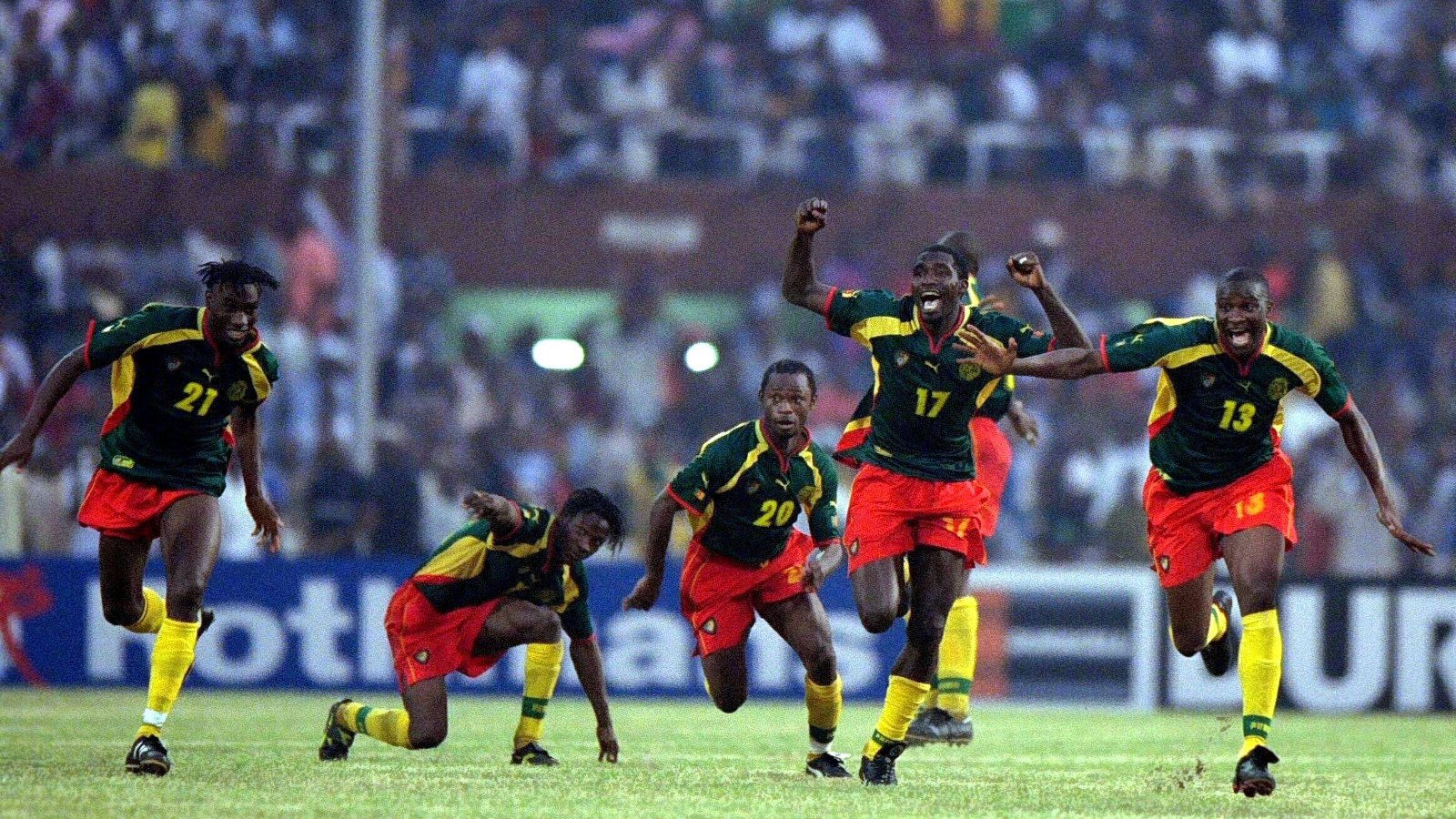
Eleven years later came another night that ended in pain. On 13 February 2000, Nigeria and Cameroon drew 2-2 after extra time in the AFCON final, before about 60,000 people. Cameroon won the shootout 4-3. It was the first final Nigeria lost there. Samuel Eto'o told THISDAY: “I cannot forget the National Stadium, Nigeria. That is where I won my first Africa Cup of Nations.”
How the gates closed
On 8 April 2003, a new National Stadium was commissioned in Abuja for the All-Africa Games that October. It seats 60,491 for football. In 2019 President Muhammadu Buhari had it renamed Moshood Abiola National Stadium. Hence the confusion. The Abiola tribute went to Abuja, while the Lagos ground, despite two decades of plans, concessions and ministerial visits, has never been renamed and is still officially known simply as the National Stadium, a name that now sounds grander than the building behind it.
Surulere hosted its last senior national team game in 2004. The Super Eagles moved on, sometimes to the smaller Teslim Balogun Stadium next door, where the Central African Republic stunned them 1-0 in a World Cup qualifier on 7 October 2021. Inside the old complex, THISDAY found the roof membrane torn and the stands crumbling. Mechanics, traders and squatters had moved in.
In April 2021, sports minister Sunday Dare spoke of 19 years of abandonment.
The return that has not happened yet
Dare's adopt-a-stadium scheme had brought in the businessman Kessington Adebutu, whose N400 million paid for a pitch, a digital scoreboard and a tartan track. In December 2020 Dare even pledged to bring Super Eagles matches back to Lagos once the work was done. It was never enough. As THISDAY recalled, Dare has said the money was “about four percent of the 100 percent of what we need”. The full overhaul was estimated at N21 billion. Concrete fatigue and the leaking roof kept the bowl shut.
The file now sits with the National Sports Commission. Its chairman, Shehu Dikko, has said the NSC is “working in earnest to fast-track and conclude the concessioning of the stadium”. THISDAY reports that international contractors have been engaged for a hybrid grass pitch and new drainage. Roof and seats come first.
“Surulere was our colosseum,” Odegbami told the paper. He called the abandonment a national tragedy.
What to watch next
No reopening date for the main bowl had been announced by October 2026. No match has been played there since the works began. The pool, indoor hall and tennis courts are open, while the city's football, from the NPFL to the football clubs in Lagos, goes on elsewhere. Lagos waits. The signs to watch are concrete: a signed concession, a repaired roof, seats back in the stands. Then a fixture list. Then the Super Eagles. Until those arrive, the ground where Nigeria first became champions of Africa remains a monument rather than a home, and every promise of a return deserves to be measured against the deadlines that have come and gone since 2021.
This article was most recently revised and updated 22 seconds ago