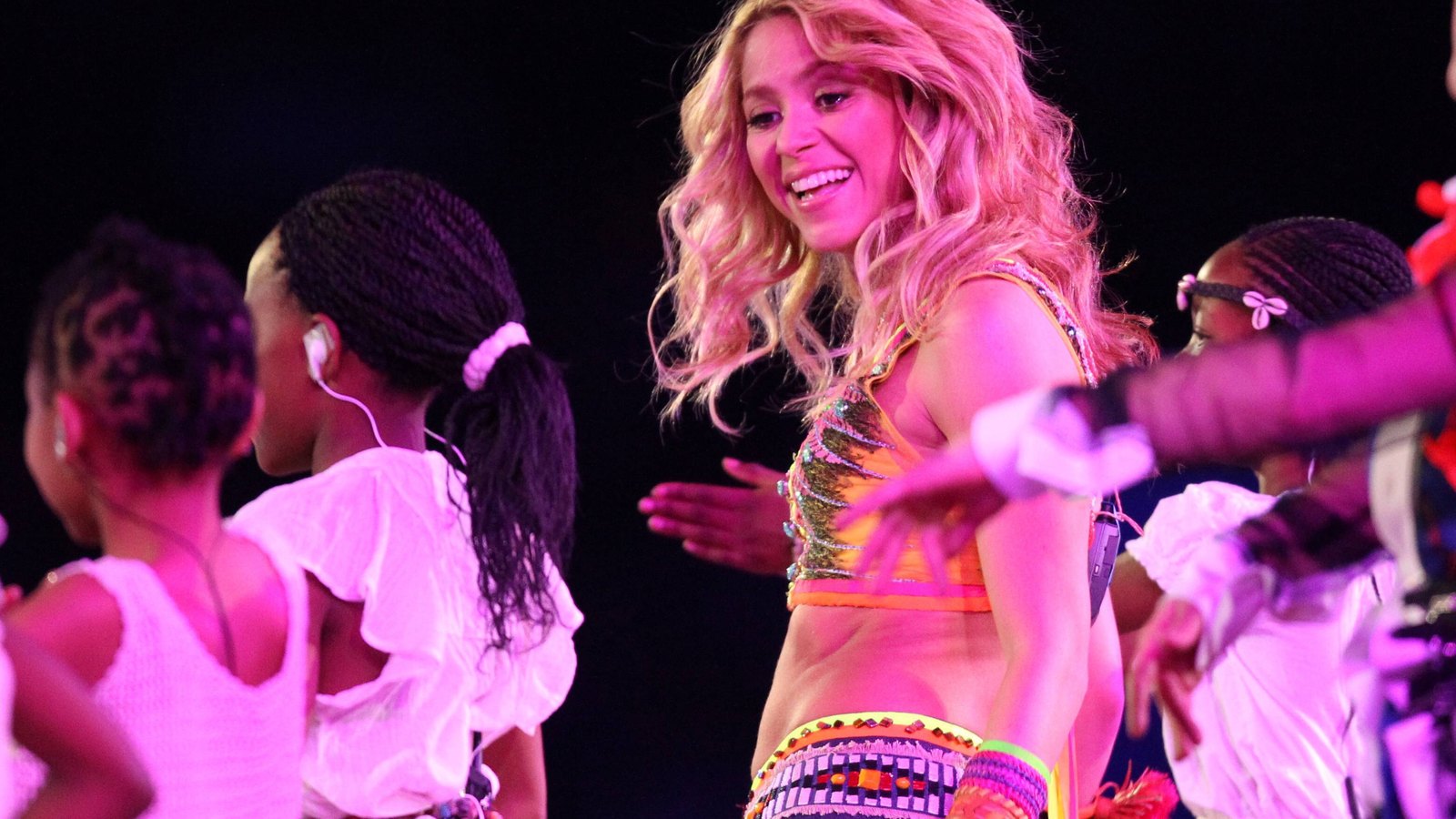
Soccer City, Johannesburg, 11 July 2010. Before the final, Shakira stepped out with the South African Afro-fusion band Freshlyground to perform Waka Waka (This Time for Africa) at the closing ceremony, with Ladysmith Black Mambazo on the same bill. For African supporters, that night is the natural starting point for any history of world cup official songs.
| Question | Answer |
|---|---|
| Official song era begins | Italia 90 (Un'estate italiana / To Be Number One) |
| Earlier tournament songs | From Chile 1962 (El Rock del Mundial) |
| 2026 official song | Dai Dai, Shakira and Burna Boy |
| 2026 official anthem | DNA, Andrea Bocelli, David Guetta, Megan Thee Stallion and EJAE |
| Nigerians on official World Cup music | Davido (Qatar 2022), Burna Boy (2026) |
| Other African names | Youssou N'Dour, Amadou & Mariam, Freshlyground |
Before the pop stars
Chile had a rock and roll number in 1962. The song was El Rock del Mundial. Los Ramblers recorded it. England answered four years later with Lonnie Donegan's World Cup Willie.
These were local records, not global products.
The model fans now recognise took shape at Italia 90. Edoardo Bennato and Gianna Nannini sang Un'estate italiana, and Giorgio Moroder produced the English version, To Be Number One. From there the list runs without a break.
Every edition from Italia 90 to 2026
| Edition | Official song or anthem | Performers |
|---|---|---|
| 1990 Italy | Un'estate italiana / To Be Number One | Edoardo Bennato and Gianna Nannini; Giorgio Moroder Project |
| 1994 USA | Gloryland | Daryl Hall and Sounds of Blackness |
| 1998 France | La Copa de la Vida (song); La Cour des Grands (anthem) | Ricky Martin; Youssou N'Dour and Axelle Red |
| 2002 Korea/Japan | Boom (song); Anthem (instrumental) | Anastacia; Vangelis |
| 2006 Germany | The Time of Our Lives (song); Celebrate the Day (anthem) | Il Divo with Toni Braxton; Herbert Grönemeyer with Amadou & Mariam |
| 2010 South Africa | Waka Waka (This Time for Africa) (song); Sign of a Victory (anthem) | Shakira with Freshlyground; R. Kelly with the Soweto Spiritual Singers |
| 2014 Brazil | We Are One (Ole Ola) (song); Dar um Jeito (anthem) | Pitbull, Jennifer Lopez and Claudia Leitte; Carlos Santana, Wyclef Jean, Avicii and Alexandre Pires |
| 2018 Russia | Live It Up | Nicky Jam, Will Smith and Era Istrefi |
| 2022 Qatar | Official soundtrack, led by Hayya Hayya (Better Together); Tukoh Taka (Fan Festival anthem) | Trinidad Cardona, Davido and Aisha; Nicki Minaj, Maluma and Myriam Fares |
| 2026 Canada/Mexico/USA | Dai Dai (song); DNA (anthem) | Shakira and Burna Boy; Andrea Bocelli, David Guetta, Megan Thee Stallion and EJAE |
Russia 2018 closed with Live It Up at the Luzhniki. Our earlier piece on the official 2018 World Cup song tells that story.
Africa's voice, from Dakar to Soccer City
African musicians were in the room long before 2010. Senegal's Youssou N'Dour co-wrote and sang the 1998 anthem with the Belgian singer Axelle Red. Eight years later, the Malian duo Amadou & Mariam joined Herbert Grönemeyer on the official anthem in Germany. Two anthems, two African voices.
South Africa changed the scale. FIFA and Sony Music named Waka Waka the official song in April 2010. Shakira said at the time that “African music is so inspiring and is poised to take its place on the global pop culture stage”. Freshlyground, formed in Cape Town in 2002 with members from South Africa, Mozambique and Zimbabwe, gave the record its roots on the continent, and proceeds went to FIFA's 20 Centres for 2010 programme of Football for Hope centres across Africa.
Then there was K'naan.
The Somali-Canadian rapper's Wavin' Flag was never FIFA's official song. It was Coca-Cola's campaign anthem. Even so, it went to number one in 17 countries, Coca-Cola reported. K'naan said the remix was “about the one time that we all get together”.
Davido, Burna Boy and the Afrobeats era
Qatar 2022 dropped the single-song format. FIFA built a soundtrack instead. The first release, on 1 April 2022, was Hayya Hayya (Better Together) by the American singer Trinidad Cardona, Davido and the Qatari singer Aisha, unveiled at the final draw. “When this came to me, I jumped on it,” Davido said in FIFA's release. Later came Tukoh Taka. It was billed as the first official FIFA Fan Festival anthem, and the first World Cup song in English, Spanish and Arabic.
The Super Eagles were not in Qatar. A Nigerian voice was.
For 2026, FIFA went further. Dai Dai, released on 15 May 2026, paired the Colombian star Shakira with Nigeria's Burna Boy as the official song, with its royalties going to the FIFA Global Citizen Education Fund to improve access to education for children. “I always wanted to do something with Burna. I think his voice takes it to another level,” Shakira said in June. DNA, the official anthem, followed on 10 June. Bocelli called it an honour. He and EJAE performed it at the opening ceremony in Mexico City the next day.
Our view
Shakira now owns two official World Cup songs, and both carry an African partner.
That says plenty. The road from Youssou N'Dour sharing a French anthem in 1998 to a Nigerian superstar co-leading the official song of a 48-team tournament in North America took less than three decades. For the club side, see the best football club anthems. The next test comes in 2030, when Morocco co-hosts and Africa gets another stage.
This article was most recently revised and updated 52 seconds ago ago